

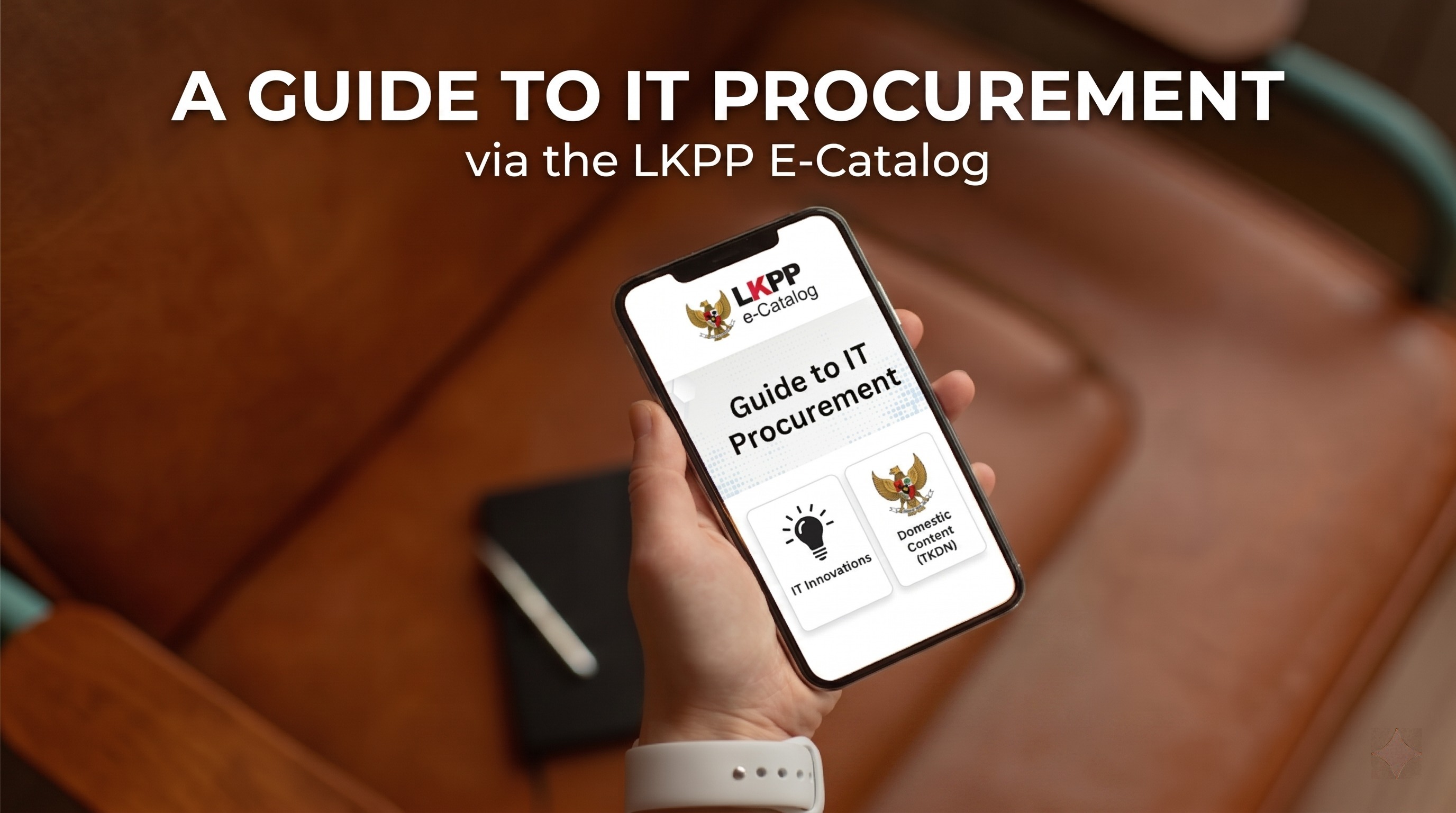
Digital transformation cannot catch up on lost ground if the pace of Government Procurement of Goods/Services (PBJP) is entangled in pure e-Tendering procedures that can consume months of time and are prone to endless objections. The solution presented is the utilization of the National Government Procurement Policy Agency (LKPP) E-Catalog via the e-Purchasing pathway.
But how does one navigate the right steps precisely for IT license and software development commodities?
Stage 1: Price Estimate Synchronization (HPS & RUP)
The foundation of e-Purchasing is not about executing a shopping cart — it is in the initial administrative process. Government agencies or departments must compile a General Procurement Plan (RUP). What is unique about IT procurement, specifically for custom software development, is that the Owner's Estimate (HPS) must account for technical assurance factors, 12-month bug warranty (SLA), and license migration — unlike the procurement of standard laptops.
Stage 2: Accessing the SPSE & Selecting the Storefront
The local Commitment-Making Officer (PPK) then accesses the National Electronic Procurement System (SPSE). IT categories are neatly organized from locally assembled products, imports, managed services, and IT consultancy services. Filter for a specific provincial region (e.g., the Local Storefront of East Java Provincial Government). Pay close attention to the Provider status, completeness of NPWP and NIB identity, and the Domestic Component Level (TKDN) verification level if available.
Stage 3: Transparent E-Purchasing Negotiation
Shopping via LKPP is like a consumer retail marketplace but layered with price accuracy rules. Once items have been linked in the SPSE shopping cart, there is a Negotiation option. The government side is permitted to bargain within a lower threshold percentage. All negotiation chat conversations with the seller are technically stored as audit trail data for the National Audit Board (BPK) — without the need for mysterious in-person meetings.
Stage 4: Package Creation & Contract Handover
Once bid terms are mutually agreed upon, the order package is issued. From here, the relevant vendor complies with strict specifications based on Delivery Time. Payment documents are only reconciled after hardware delivery is confirmed, or after the UAT (User Acceptance Test) handover certificate is achieved if the purchase is hosted software.
At Meta Media Optima, all top-tier IT commodities — from corporate hardware components and global original software licenses to SaaS Dashboard development — are already registered in the LKPP system. This frees your PPK and administrative staff to quickly execute program budget disbursement without concern.